Designing a unified account experience across complex systems
Interaction Design
·
Mobile App
·
CICC
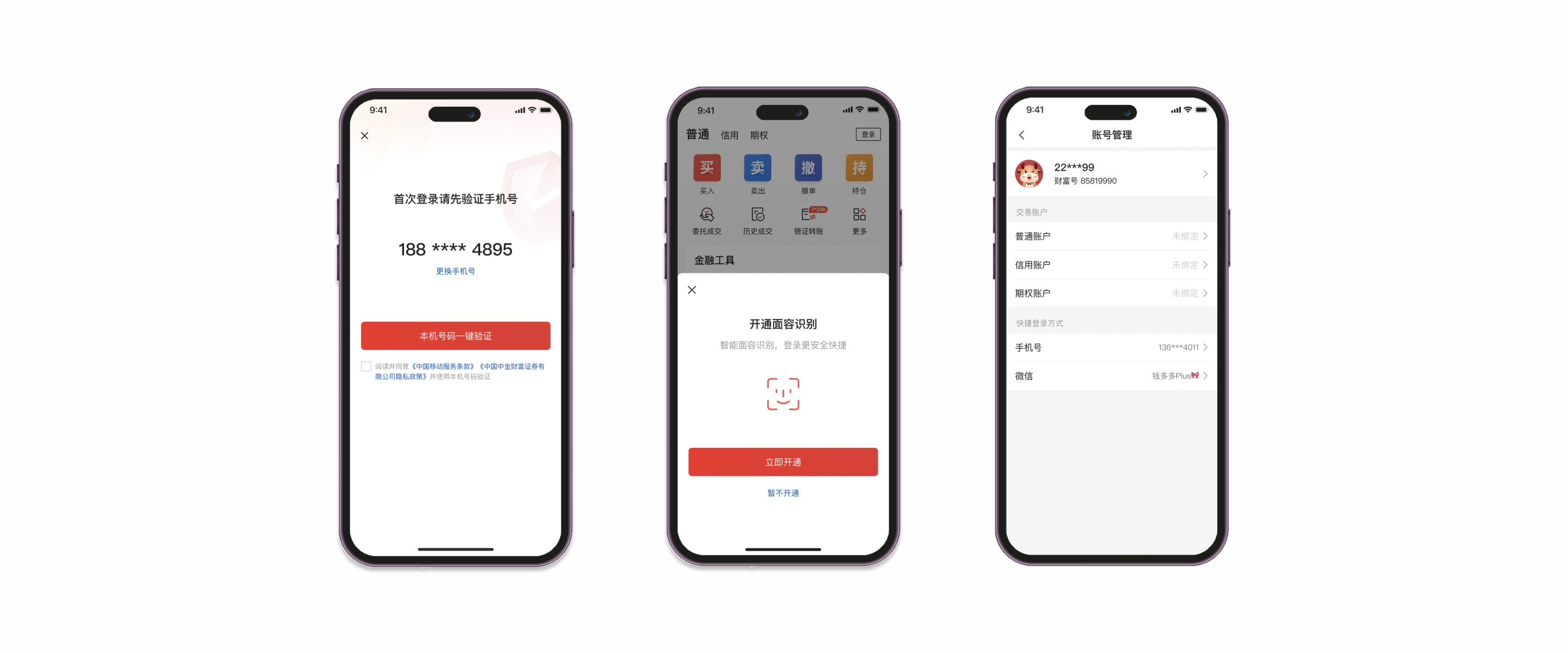
I led the experience design for CICC Wealth’s One ID upgrade, bringing fragmented login identities, trading accounts, data, and service permissions into a clearer account experience. Working closely with engineering, I translated complex account rules and migration logic into more intuitive login and account-management flows.
Post-launch results
70%+ of existing users successfully upgraded
Context
CICC Wealth is a major broker in China’s securities market. In its app, a user may have two distinct accounts: an Online Account and a Trading Account. The Online Account is created when a user signs in with a phone number or social media. A Trading Account is created only after the user successfully completes the securities account-opening process.
The account model created friction across the user journey
In the existing system, a customer could have both an internet account and a trading account. These accounts were created and accessed in different ways, while user data and service permissions were stored across separate systems. Some account relationships were one-way, which meant customers could encounter repeated sign-ins or find that the features and information available to them changed depending on how they entered the app. The challenge was to bring these identities and account relationships into a more unified experience while preserving familiar login methods and continuity of users’ existing data and services.
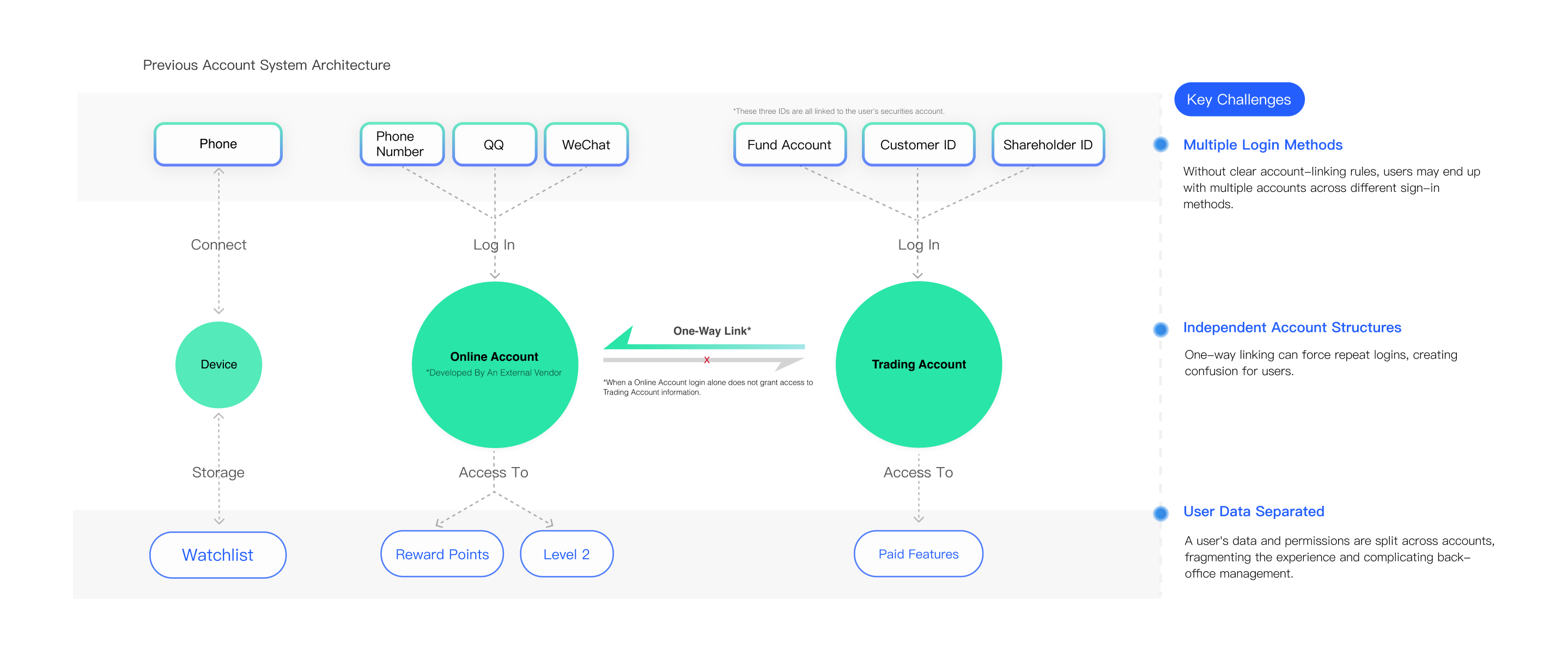
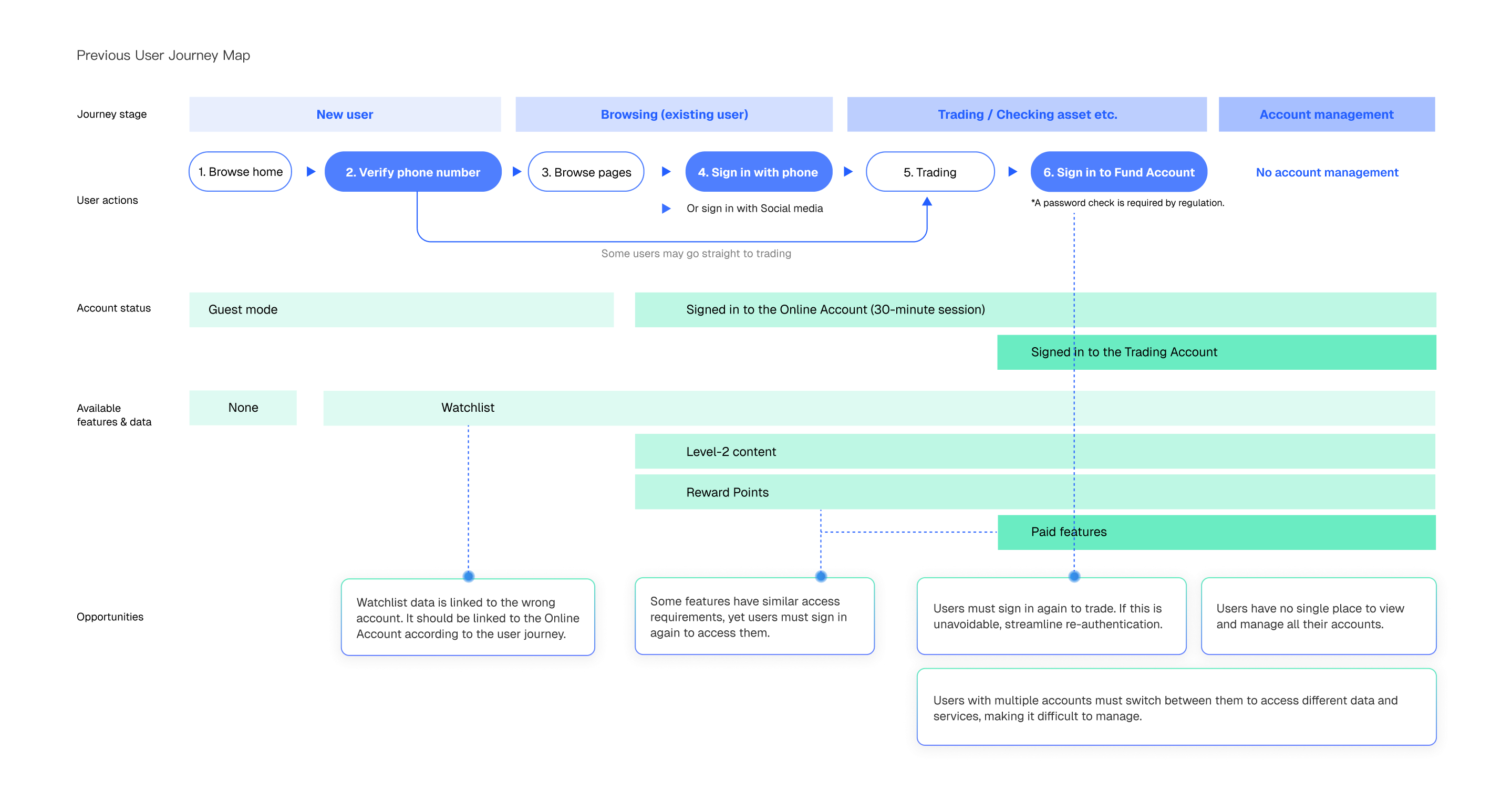
These account system shaped how users accessed different features and services. To show how the fragmented structure affected their experience, I mapped the journey from browsing and trading to account management.
From journey friction to a unified account model
The journey revealed that users had to move between the Online Account and Trading Account to access different services, with no single place to manage them. A separate sign-in could also interrupt the transition from browsing to trading. These insights informed a target model that links a user’s accounts under one identity and brings related data and services into one manageable system.
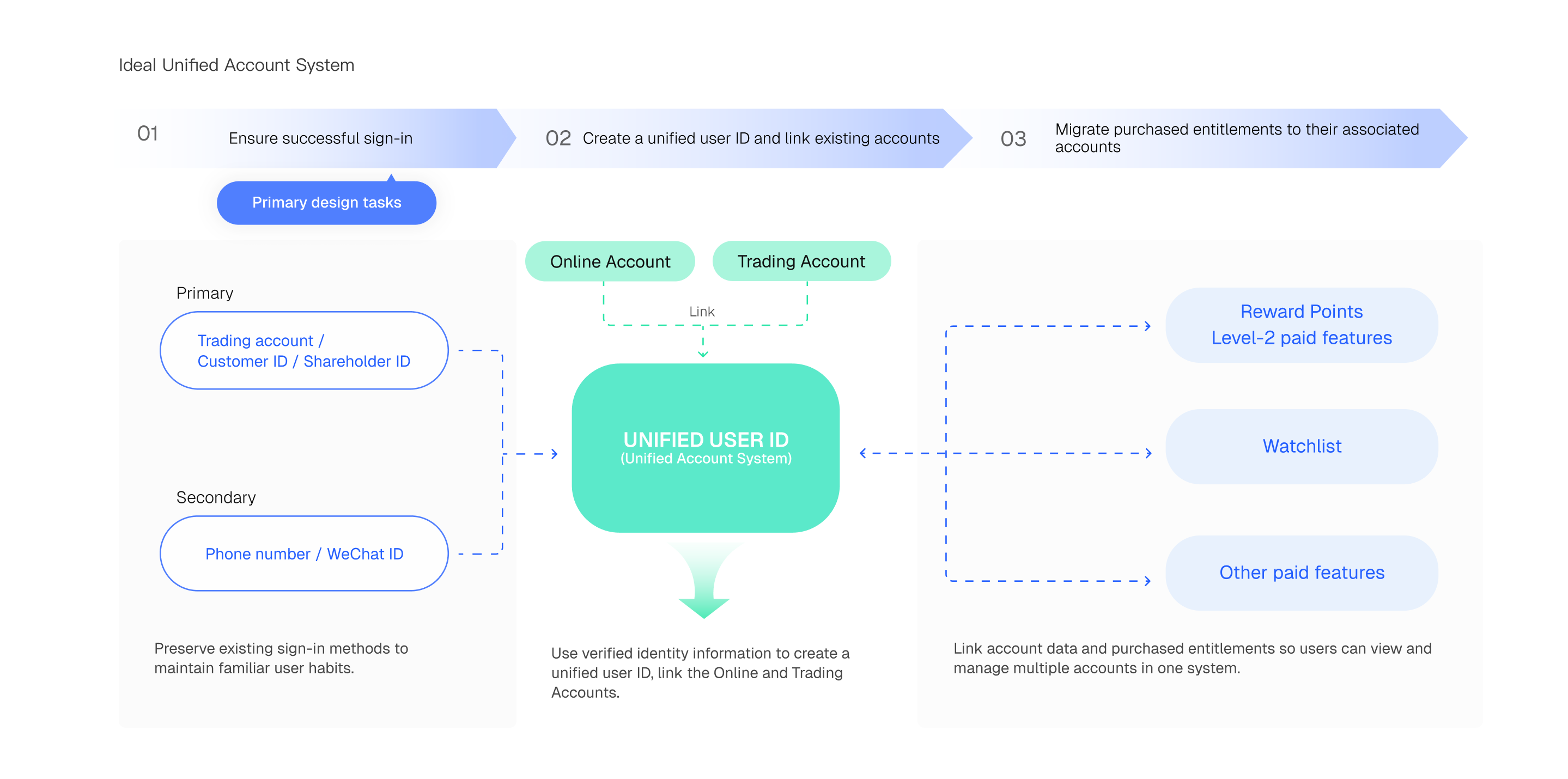
Turning the target model into a workable migration
This was more than an account migration. Multiple account types, sign-in paths, data, and entitlements were connected across the app, so a change to the account system could affect many different user journeys.
01 — Mapping migration touchpoints across the app

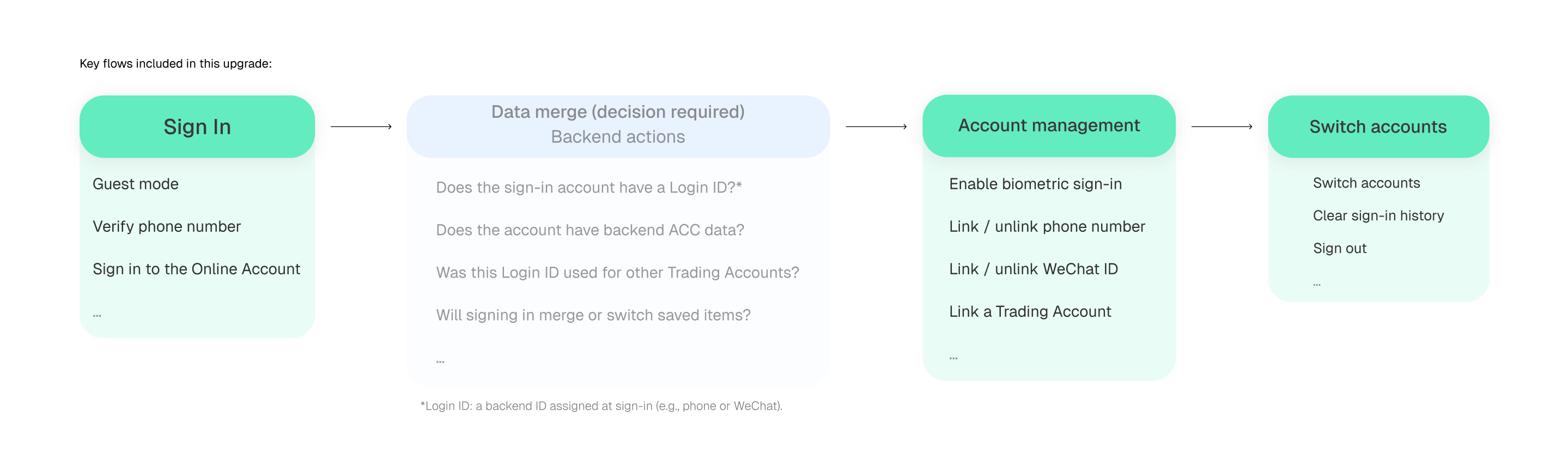
I organized the work into four modules—sign-in, data merging, account management, and account switching—then broke each down into user scenarios and key decision points. To check coverage, I mapped detailed flows, tracing how login IDs, backend account data, watchlists, and saved content could be linked, merged, or switched. This modular view helped us uncover edge cases and establish coherent migration logic before designing individual experiences.
02 — Defining what to consolidate—and how

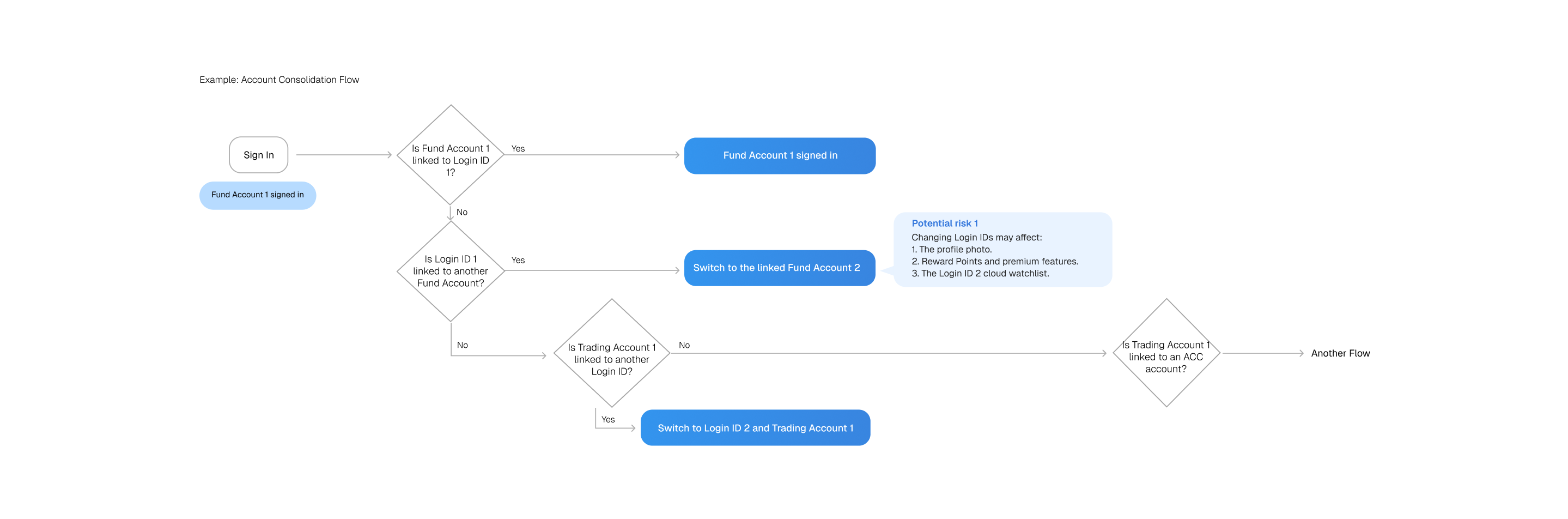
Account consolidation was not a simple merge. A sign-in could be associated with different Login IDs, Trading Accounts, backend ACC data, watchlists, or saved items—so the same action could affect users differently. I worked closely with product and engineering to trace these relationships and determine, data type by data type, what should be linked, migrated, merged, switched, or kept separate. When a technical constraint ruled out the preferred solution, I explored alternative product and interaction approaches. I then translated the agreed rules into a clear flow, helping users understand which accounts and data were affected, what action was needed, and what to expect next.
Reshaping Key Account Experiences
With the migration strategy in place, I translated it into focused improvements across key account touch points—from sign-in to account management.
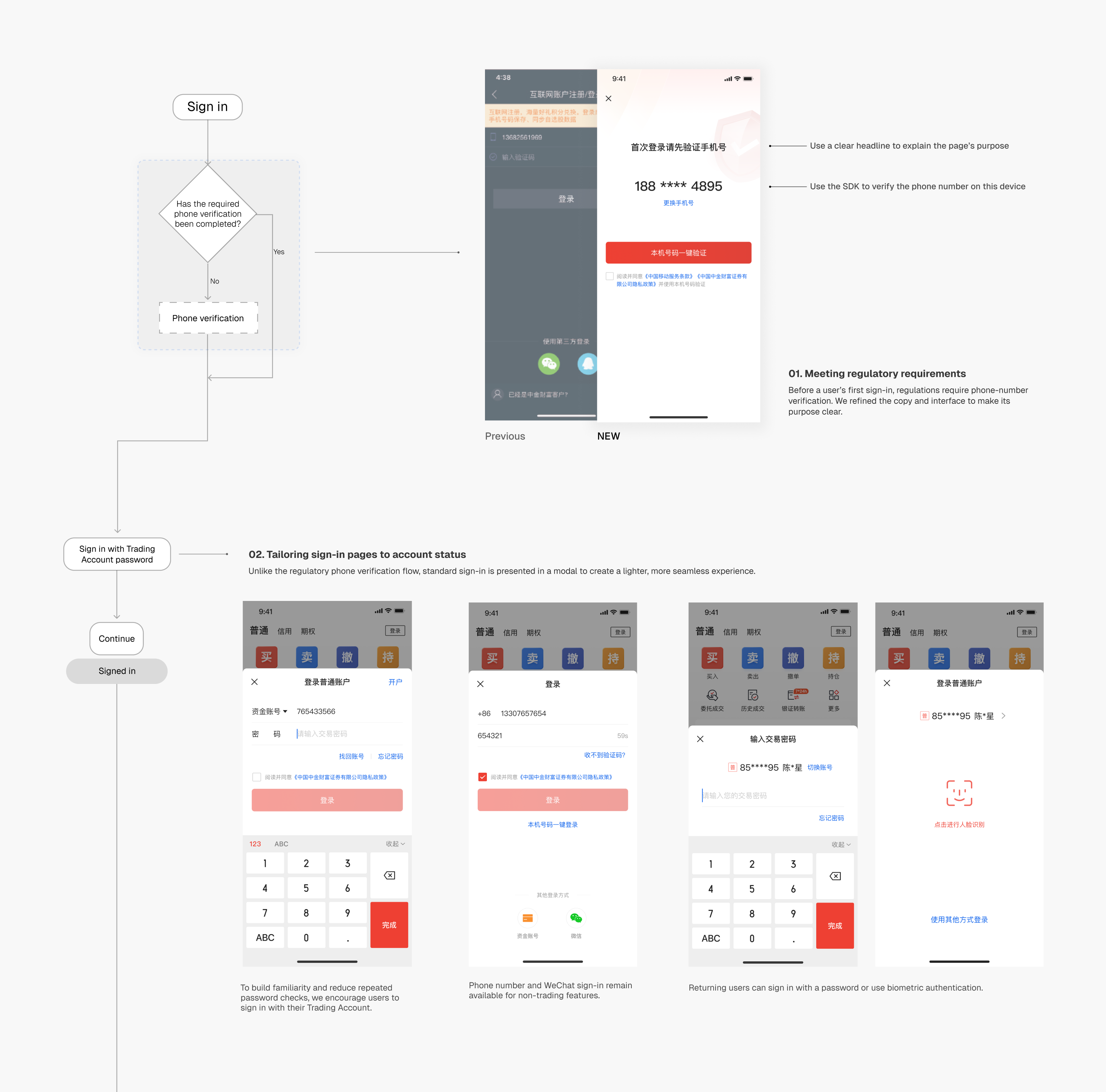
01 — Sign-in shaped around account state

Sign-in had to accommodate regulatory requirements, multiple account types, and different user needs. A single, fixed flow could not serve every scenario well. I redesigned the experience around users’ account states, guiding them toward the most suitable sign-in path while balancing compliance, access, and ease of use.
02 — Make account transitions seamless

After the system upgrade, a user’s first sign-in could trigger data consolidation or an account switch. Rather than interrupting the flow with a notification, we handled these changes silently. This kept sign-in focused on the user’s immediate goal—especially when they came to trade—while avoiding alerts that might appear out of context, disrupt the task, or expose unnecessary account-system complexity.
03 — Give users control over account relationships

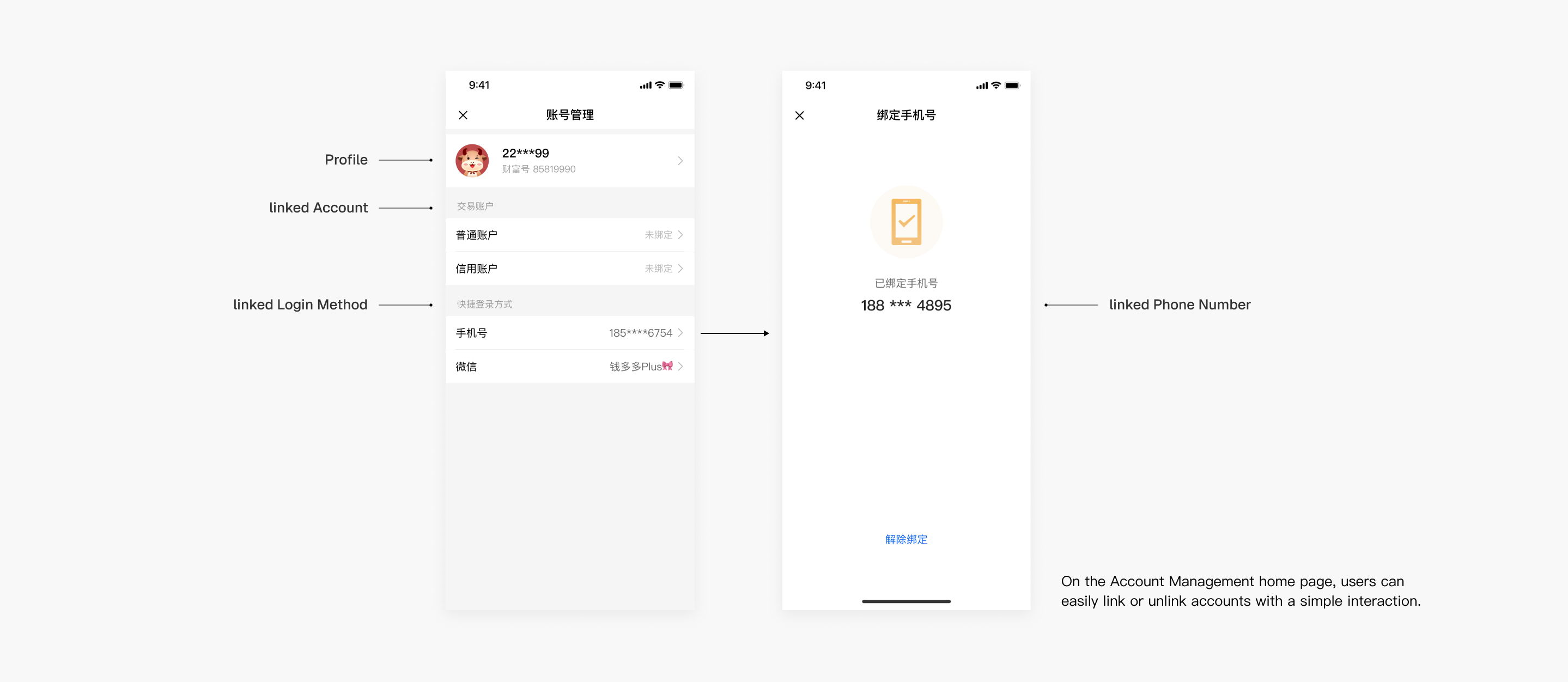
Automatic linking could associate accounts incorrectly. I redesigned Account Management to help users review their linked accounts, correct mismatches, and link accounts manually—making account relationships easier to understand and manage.
Turning system constraints into a clearer experience
The new account experience brought sign-in, account relationships, and user data into a clearer, more unified system. By tailoring sign-in to account status, handling data transitions in the background, and giving users control over linked accounts, I helped reduce friction without exposing the complexity of the underlying system. Getting there meant working closely with product, engineering, and other teams to map dependencies across the app and identify the core issue behind many separate pain points: fragmented account relationships. This project reinforced that good product design is not about exposing system complexity, but resolving it across teams and translating it into a simpler, more manageable experience.